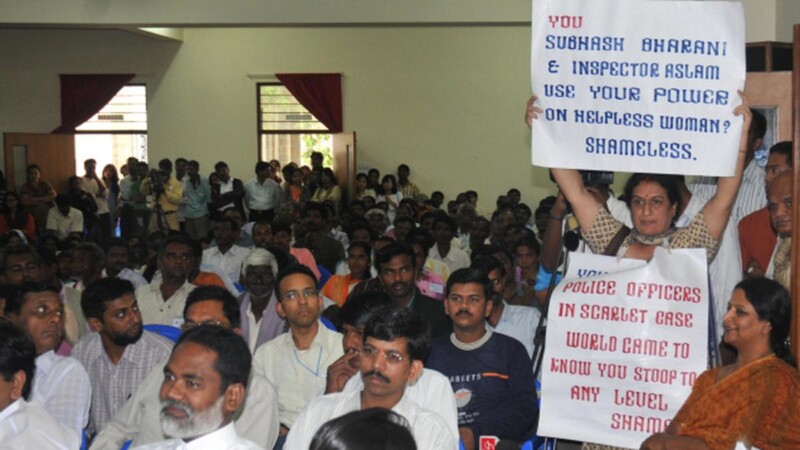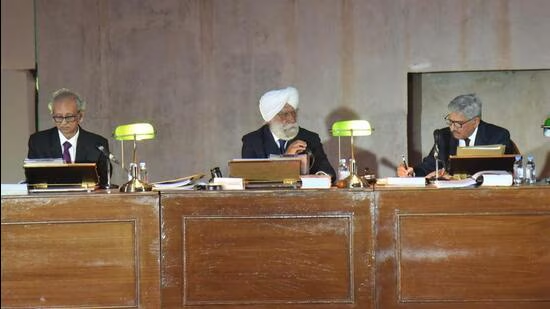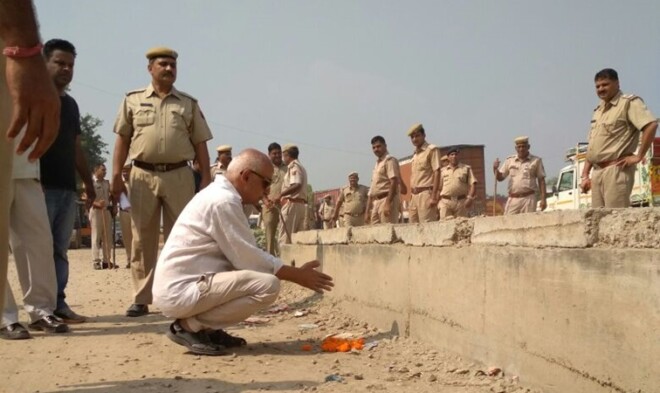

People’s tribunals have long served as informal yet powerful mechanisms for investigating state violence and social injustice in India, particularly communal attacks on religious minorities. Such violence, often fueled by prejudice and political complicity, leaves survivors with deep “wounds of the soul” that cannot heal without acknowledgment, remorse, reparations, and justice—conditions rarely provided by official institutions. In response, citizen-led inquiries have emerged as alternative spaces where victims’ testimonies are heard and publicly affirmed, often with greater credibility than government commissions. From early investigations into post-independence communal riots to grassroots movements for transparency and the right to food, public hearings have exposed corruption, starvation, and systemic neglect. These forums enable communities to reconstruct truth, challenge official narratives, and demand accountability. They also create spaces of empathetic listening where experiences of homelessness, hunger, and exclusion can be voiced with dignity. In this way, people’s tribunals both document injustice and strengthen democratic practice by allowing citizens to reclaim their role as moral and political arbiters.
Part of Episode XXXIV: “Nous Accusons II. People’s Tribunals between Politics, Activism and Art” with Zuleikha Allana, Warisha Farasat, Harsh Mander & Florian Malzacher
14. FEB 2026 – Black Box, New Delhi / India
In co-production with the Goethe-Institut/ Max Mueller Bhavan, New Delhi & the Alkazi Theatre Archive
Biography
Harsh Mander, human rights and peace worker, writer, columnist, researcher and teacher is Chairperson, Centre for Equity Studies, devoted to the analysis and development of public policy and law for justice and rights of disadvantaged groups. To counter rising hate violence and lynching, he leads the national initiative called Karwan e Mohabbat or Caravan of Love, for atonement, solidarity, healing, conscience and justice. He is a PhD from Vrije University in Amsterdam. His 25 books include Partitions of the Heart: Unmaking the Idea of India’, Burning Pyres, Mass Graves and a State That Failed Its People: India’s Covid Tragedy, Looking Away: Inequality, Prejudice and Indifference in New India, and Ash in the Belly: India’s Unfinished Battle against Hunger. He was Special Commissioner to the Supreme Court of India in the Right to Food case for twelve years from 2005-17, during which time he investigated starvation deaths, and reviewed implementation and directed public policy reform for advancing the right to food and nutrition in several states in India. The Peace Research Institute Oslo has included him in its 2022 shortlist of people recommended for the Nobel Peace Prize & he was awarded an honorary doctorate by the University of York in 2024.
Related Videos

By loading the video, you agree to YouTube's privacy policy.
Learn more
By loading the video, you agree to YouTube's privacy policy.
Learn more
By loading the video, you agree to YouTube's privacy policy.
Learn more
By loading the video, you agree to YouTube's privacy policy.
Learn more
By loading the video, you agree to YouTube's privacy policy.
Learn more
By loading the video, you agree to YouTube's privacy policy.
Learn more