What kind of assembly is a neighbourhood? Partly choice, partly coincidence, partly shaped by market forces, class and politics, we find ourselves living in proximity to people we often, if at all, barely know. And yet, there is an expectation embedded in this closeness: the neighbourhood helps construct a sense of home, it is part of our social environment, it is even symbolically charged – a synonym for social care as well as social control. What responsibilities does it entail? What possibilities for shared agency does it offer? And how can artistic strategies contribute to the constantly shifting constellations it comprises? Sociologist Ulf Bohmann looks through the lense of social and democratic theory at sociocultural, spatial and political relationships of the current European Capital of Culture, the East German city of Chemnitz. Artist Anna Rispoli works on the boundary between artistic creation and civic space, developing prototypes for sharing material resources, intelligence and affect. Alexander Koch, co-founder of Neue Auftraggeber (New Patrons), presents a model of democratic commissioning that repositions art within the structures of everyday life. The 31st edition of The Art of Assembly reflects on neighbourhood as a space of conflict, negotiation, imagination and shared action.
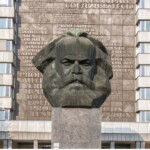

Within the flagship project programme Living Neighbourhood in Chemnitz European Capital of Culture 2025.