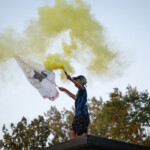
How could our cities look if they were not still mainly designed around the needs and imaginations of Western white men? What if urban planning began with the perspectives of children, the elderly, migrants, and those who are usually planned for — but rarely listened to? This edition of The Art of Assembly examines how intergenerational, intercultural, and inclusive approaches can transform the ways cities are thought, built, and inhabited. Literary scholar Cecile Sandten understands cities as palimpsests, in which overlapping spatial and representational layers reveal processes of change, power, and interpretation within urban space. Artist and theatre maker Darren O’Donnell discusses how participatory models that centre children and intergenerational exchange can change the social fabric. Sajad Habibi, expert resident elected to the Migration Advisory Board of Chemnitz, brings perspectives from migrant and refugee communities into urban policy and representation.